
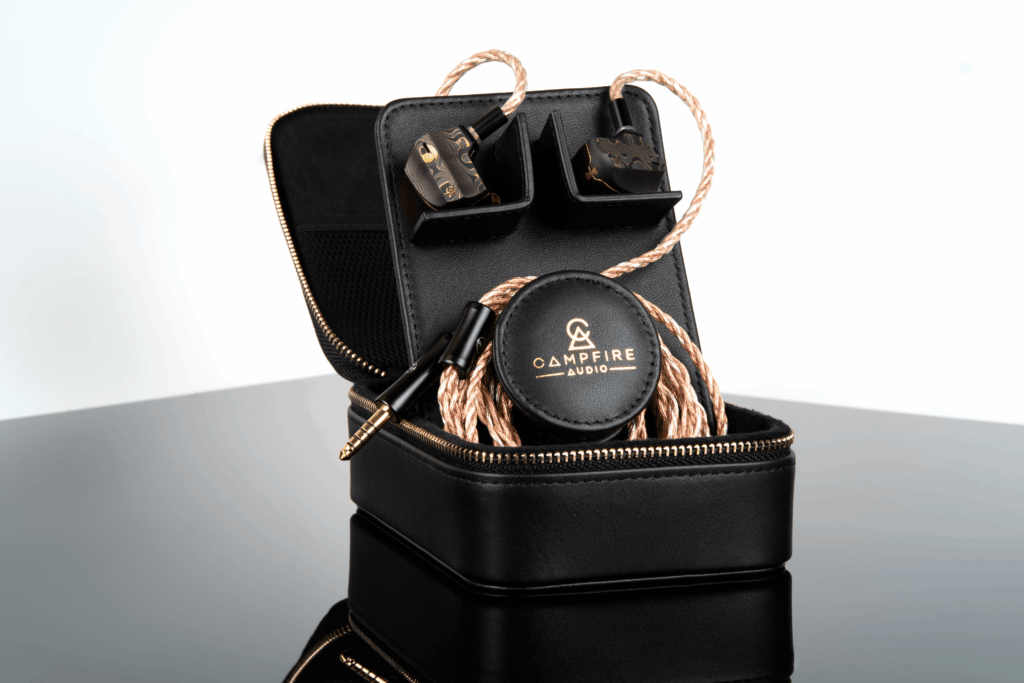
In an industry where most premium earphones roll off production lines in large-scale overseas facilities, one company in Portland, Oregon has spent a decade doing things differently. Campfire Audio designs, tunes, and assembles every one of its in-ear monitors by hand at its Portland workshop. The product range spans from Axion ($249) to Chimera ($7,500), and every unit that ships carries the literal fingerprints of the small team that built it.
Ten years later, that decision has not changed. The question worth asking is why.
A Workshop Built Around People
Ken Ball founded Campfire Audio in 2015 with a clear conviction: the people building audio products should understand their purpose as deeply as the engineers who design them. In most of the consumer electronics industry, manufacturing and design live in different facilities, often in different countries, connected by specification documents and inspection checklists. Campfire Audio collapses those layers.
The core team is small by design. Ball leads tuning and product development. Bren Loeliger and Valivann Seangly are among the builders whose hands-on involvement creates continuity across the entire catalog. Customer service operates the same way: the same two people respond to every inquiry. That kind of direct personal contact is unusual in consumer electronics at any price point.
What Hand-Built Means in Practice
Building an in-ear monitor (IEM) by hand requires precision at scales most manufacturing environments leave to machines. A balanced armature driver, the type found in most premium IEMs, measures only a few millimeters across and must be positioned correctly inside a housing small enough to sit in the human ear canal. Getting that right, consistently, requires trained hands and disciplined process.
Campfire Audio validates every product’s acoustic performance using Audio Precision measurement equipment, the same class of instrumentation used in professional speaker labs and broadcast studios. The handmade process does not mean inconsistent results. It means a skilled person is accountable for each unit’s output.
Materials are chosen with equal intention. The catalog includes machined aluminum housings, 3D-printed acrylic bodies, stainless steel faceplates, and biocompatible lacquer coatings. These are not cost variables adjusted to hit a margin target. They are deliberate material selections made for their acoustic properties, their tactile quality, and their durability across years of daily use.
Ten Years of Refinement
Campfire’s most enduring product is Andromeda, an all-balanced-armature IEM first introduced in 2015 that has maintained a near-continuous presence on audiophile best-of lists for a decade. Its reputation is not tied to a single review cycle. It has been measured, re-measured, compared, and recommended consistently enough that it has become a reference point across the premium IEM category.
In 2025, Campfire released Andromeda 10, the 10th-anniversary expression of that lineage. Featuring ten balanced armature drivers per side and a connector updated to the modern 2-pin standard, Andromeda 10 is both a product milestone and a demonstration of what a decade of continuous iteration on a single design philosophy can produce.
At the current pinnacle of the catalog sits Chimera, a nine-driver quad-brid IEM that combines dynamic, balanced armature, electrostatic, and bone conduction technologies in a single shell. Priced at $7,500, Chimera represents the outer edge of what the Portland workshop can build today. It was not technically possible in 2015. It exists because of everything Campfire Audio learned, built, and refined in the years between.
Why It Still Matters
The premium IEM market has grown considerably over the past decade. New manufacturers enter regularly, many offering strong specifications at competitive prices from large-scale production. In that environment, the argument for a hand-built product from a small Portland team is not primarily a specification argument.
It is about knowing who made the product, where, and with what intentions. It is about a purchase that connects the listener to a specific place, a specific small team, and a decade of daily decisions made at a single workshop.
Campfire Audio has had every opportunity to scale through contract manufacturing. The company has chosen not to. Hand-assembled production in Portland is not a brand narrative. It is an operational reality for Ken Ball and his team, the same as it was when the first product shipped in 2015.